Farm hauling
Hauling hay: trailers, width rules, securement and pay
By Mike Shelton, truck dispatcher, 15 years in trucking · Reviewed and updated · How we check facts
Hay hauling at a glance
Hay moves in two waves. In summer, as each cutting is baled, it goes from the field to a barn, a buyer or a stack yard nearby. In fall and winter, when pastures are short, it moves long distances to dairies, feedlots and areas in drought. The US harvested hay from 49.6 million acres in 2025, so nearly every region has some. USDA NASS Crop Production 2025 Summary (January 2026)Checked October 2026
The work suits flatbed owner-operators, ranchers with a gooseneck and small fleets in farm country. It is honest, physical freight with its own quirks: field loading, dust, bales that settle, and loads that are wider than most freight.
Bale types and what they mean for the load
| Bale | EXAMPLE size | EXAMPLE weight | How it loads |
|---|---|---|---|
| Small square | 14 x 18 x 36 in | 50 lb | Hand stacked or in bundles; often in vans or on flatbeds with sides |
| Large square | 3 x 4 x 8 ft | 1,000 lb | Forklift or squeeze; stacks tight in tiers on a flatbed |
| Large round | 5 ft wide x 6 ft across | 1,200 lb | Bale spear or grapple; one or two rows, standing or rolled |
Large squares are the trucker's favorite: they stack square, stay within legal width two wide, and use the deck well. Round bales are the most common on farms but awkward on a trailer, since two side by side go past legal width. Small squares are the most work to load but sell well to horse owners.
Hay hauling trailers
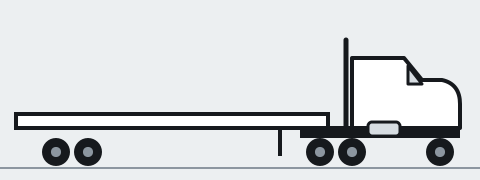
- 48 or 53 ft flatbed: the standard for long hay hauling, especially large squares.
- Step deck: the lower deck gains height for an extra tier where the state height limit is tight.
- Gooseneck or bumper-pull flatbed: for local hauling behind a pickup or farm truck.
- Self-unloading bale trailers: farm equipment that picks up and drops round bales without a loader; mostly for field-to-yard work.
- Dry vans and containers: for compressed or small bales headed to feed stores and export.
A tractor-trailer combination rated 26,001 lb or more, towing a trailer rated over 10,000 lb, needs a Class A CDL. 49 CFR 383.5Checked October 2026 More on trailer choices in hauling trailers.
Width and height: the rules that shape a hay load
The federal width limit on the National Network is 102 inches. 23 CFR 658.15Checked October 2026 Two large squares laid 4 ft side by side make 8 ft, which fits. Two round bales 5 ft wide make about 10 ft, which doesn't, so round bale loads depend on state exceptions and permits:
| State | Hay rule | Source |
|---|---|---|
| Kansas | Bales up to 12 ft wide; not on national network highways without a permit | K.S.A. 8-1902(d)Checked October 2026 |
| Texas | One-year Hay permit for round bales loaded side by side | TxDMV oversize/overweight permits listChecked October 2026 |
| Oklahoma | Annual round bale hay permit, $25 | ODOT permit fees (addendum to OAC 730 Chapter 50)Checked October 2026 |
Each state sets its own terms, often limiting wide hay loads to daylight, to certain roads or to good weather. Get the permit or confirm the exception for every state on the route, and carry the paperwork. Height is a state matter too: there is no federal limit GAO-15-236Checked October 2026, and limits run from 13 ft 6 in in Pennsylvania PennDOT (75 Pa.C.S. 4922)Checked October 2026 to 14 ft in California. Cal. Vehicle Code 35250 (via Caltrans legal truck access page)Checked October 2026 Three tiers of 3 ft large squares on a 5 ft flatbed deck reach 14 ft, so measure before you leave the field.
Hauling hay bales safely: securement
Federal rules require every load to be secured so it can't fall, blow or shift enough to affect handling. 49 CFR 393.100(b)-(c)Checked October 2026 For hay, that means:
- Enough straps: working load limits adding up to at least half the load's weight. 49 CFR 393.106(d)Checked October 2026
- Enough of them: at least two for any group over 5 ft up to 10 ft long, plus one for each extra 10 ft. 49 CFR 393.110(b)Checked October 2026
- Over every row and tier: a strap that only holds the top tier lets the bottom one walk.
- Edge protection: corner protectors stop straps cutting into bales and losing tension.
- Re-tighten early: bales compress in the first miles; check after 10 to 25 miles and at every stop.
Tarping hay and keeping it sellable
Rain on a hay load costs the seller money. Wet bales lose feed value, grow mold and can heat up, and a buyer can refuse or discount them on arrival. Many long-haul hay loads are tarped for that reason, and some buyers write it into the order. Tarps also stop loose leaves and stems blowing off the top tier. Ask before you load whether the hay must be tarped, who supplies the tarp, and whether tarp pay is included. Take photos of the load at pickup and delivery, so a quality complaint about the hay itself isn't pinned on the haul.
Loading hay in the field
Hay rarely loads at a dock. Most loads come off a field, a stack yard or a barn, loaded by the seller's tractor with a bale spear, a squeeze or a forklift. Ground conditions matter: a wet field can bury a loaded tractor-trailer, so agree in advance where the truck will park. Loading a full trailer of large squares can take under an hour with a good operator, while small squares stacked by hand can take half a day with a crew. Agree on loading time and pay for delays before you go, and check that every bale in the load is the same type and size so the stack stays square.
Small squares load in an interlocking pattern, each tier crossed over the one below, so the stack ties itself together. Large squares stack in straight columns, tied by straps across each row. Round bales ride on their flat ends or rolled on their curved sides, with the bales butted tight so they can't roll.
Hay hauling seasons
| Time of year | What moves |
|---|---|
| Late spring to early summer | First cutting from field to barn and to nearby buyers |
| Summer | Later cuttings, stack yard to dairies and horse barns |
| Fall | Stocking up for winter, long hauls to feedlots and ranches |
| Winter | Long hauls to drought and snow-hit areas, export loads |
Cutting dates vary by region and crop, and drought anywhere sends hay moving long distances in any month. A hay hauler who also books other flatbed freight can follow demand instead of waiting for it.
Weight: when bales hit the scale
Dry hay is light for its size, so most hay loads run out of deck or height before weight. Wet or dense bales are the exception. On the Interstate the gross limit is 80,000 lb unless the bridge formula sets less 23 CFR 658.17(b)Checked October 2026, and axle groups must pass it too. 23 CFR 658.17(e); FHWA Bridge Formula WeightsChecked October 2026
Load math for large squares
EXAMPLEA 48 ft flatbed carries large squares 3 ft high, 4 ft wide and 8 ft long, laid two wide across the deck and six deep along it, three tiers high: 36 bales. At 1,000 lb each, that is 36,000 lb of hay. With a tractor and flatbed weighing 31,000 lb, the truck grosses 67,000 lb, well under 80,000. Height is the limit here: three tiers on a 5 ft deck reach 14 ft, legal in some states and not others. Check your axle spacing with the bridge formula calculator.
Hours rules during harvest
Federal hours-of-service rules don't apply, in the planting and harvest periods each state sets, to drivers hauling agricultural commodities within 150 air-miles of the source. 49 CFR 395.1(k)Checked October 2026 For hay haulers, that covers most field-to-barn and local farm runs in season. Long hauls to distant buyers, and any work outside the state's dates, fall under the normal hours limits and ELD rules.
Hay hauling rates
Hay hauling rates are set locally, and buyers and sellers quote them several ways: per bale for short farm runs, per ton for bigger buyers, per loaded mile or flat per load for long hauls. Loading time matters more than in most freight, since field loading can take hours, and empty miles home are common in hay country.
Converting between quotes keeps you honest. A per-bale price only means something once you know the bale weight, and a per-ton price only once you know how many tons fit under your height and width limits. Turn every offer into dollars per load, then dollars per mile over all the miles the trip takes, loaded and empty, before you compare it with other freight your truck could haul that week.
Pricing a long haul
EXAMPLEA rancher in drought needs 36 large squares hauled 520 miles. The hauler quotes $3.25 a loaded mile, $1,690 for the load, plus $75 an hour for loading time over two hours. Deadhead to the field is 40 miles and the return is empty. Over all 1,080 miles, the load pays about $1.56 a mile. That is only worth it if the hauler finds freight for the trip home; otherwise the price per loaded mile has to go up.
How to start hauling hay
- Choose local or long haul. Local hay work fits a gooseneck behind a pickup; long hauls need a tractor and flatbed or step deck.
- Get licensed. Class A for most tractor-trailers; check the rating on pickup setups.
- Set up authority and insurance if you haul for hire, especially across state lines.
- Equip the trailer: 4 in straps and winches, edge protectors, a measuring stick for height, and side rails for small squares.
- Learn your states' hay rules: width, permits, travel hours and harvest dates for the hours exemption.
- Find buyers and sellers: hay brokers, feed stores, dairies, feedlots, horse barns and ranchers advertising locally.
- Price every load from your cost per mile and count loading time and empty miles.
Mistakes that cost hay haulers
- Loading round bales two wide without the permit or exception for every state on the route.
- Measuring height at the field, then forgetting the truck sits higher once it bounces onto the highway.
- Not re-tightening straps after the first miles, when bales settle the most.
- Hauling hay that feels warm inside the bale.
- Quoting long hauls without a plan for the trip home.
- Skipping a written agreement on loading time, tarp pay and who carries the risk of rain damage.
Agricultural hauling beyond hay
Hay haulers often branch into the rest of agricultural hauling: grain in hopper bottoms (see bulk hauling), cattle in pot trailers (see cattle hauling) and agricultural equipment hauling, moving tractors, balers and combines between farms and dealers on step decks and lowboys. Each brings its own rules, covered in hauling, explained by rig.
Ag freight runs on seasons, so the gaps between them are where a truck loses money. Our desk plans loads around harvest so your flatbed, step deck or livestock trailer keeps earning, and you approve every load before it is booked. More about GearLoads dispatch on our home page.
Hauling hay FAQ
01How many round bales fit on a flatbed?
On a 48 ft flatbed, a single row of 5 ft wide round bales standing on end or rolled fits about 9 or 10, and two tiers or two rows roughly double that. Two rows side by side make the load about 10 ft wide, over the 102 inch federal width, so you need a state hay exception or permit. Weight per bale decides the rest.
02Is a hay load allowed to be wider than 8.5 feet?
Only where a state allows it. The federal width limit on the National Network is 102 inches. Some states carve out hay: Kansas lets bales ride up to 12 ft wide but not on national network highways without a permit, Texas issues a one-year hay permit for round bales side by side, and Oklahoma sells a $25 annual round bale permit.
03Do hay haulers need logbooks?
Often not during harvest. Federal hours-of-service rules don't apply, in the planting and harvest periods each state sets, to drivers hauling agricultural commodities within 150 air-miles of the source. Hay fits as an agricultural commodity. Outside those periods or beyond 150 air-miles, the normal hours rules and ELD requirements apply, so check your state's dates.
04How do you strap down round bales?
Use enough straps that their working load limits add up to at least half the load's weight, and at least two for any bale group over 5 ft long, with one more for every extra 10 ft. Run straps over each row, use edge protectors so they don't cut in, and re-tighten after the first few miles because bales settle and straps loosen.
05What does hay hauling pay?
It is priced by the bale, the ton, the loaded mile or the load, and rates are local. Short farm-to-farm runs often pay by the bale or ton, while long hauls to dairies and drought areas pay by the mile or load. Count loading time and empty miles back, because hay is often loaded slowly in fields with no backhaul nearby.
Mike Shelton, Truck dispatcher
Mike Shelton is a truck dispatcher with 15 years of experience in trucking. He writes and reviews the GearLoads hauling guides, calculators, factoring and DOT compliance pages, and checks every rule against its official source.